Scott McFarland
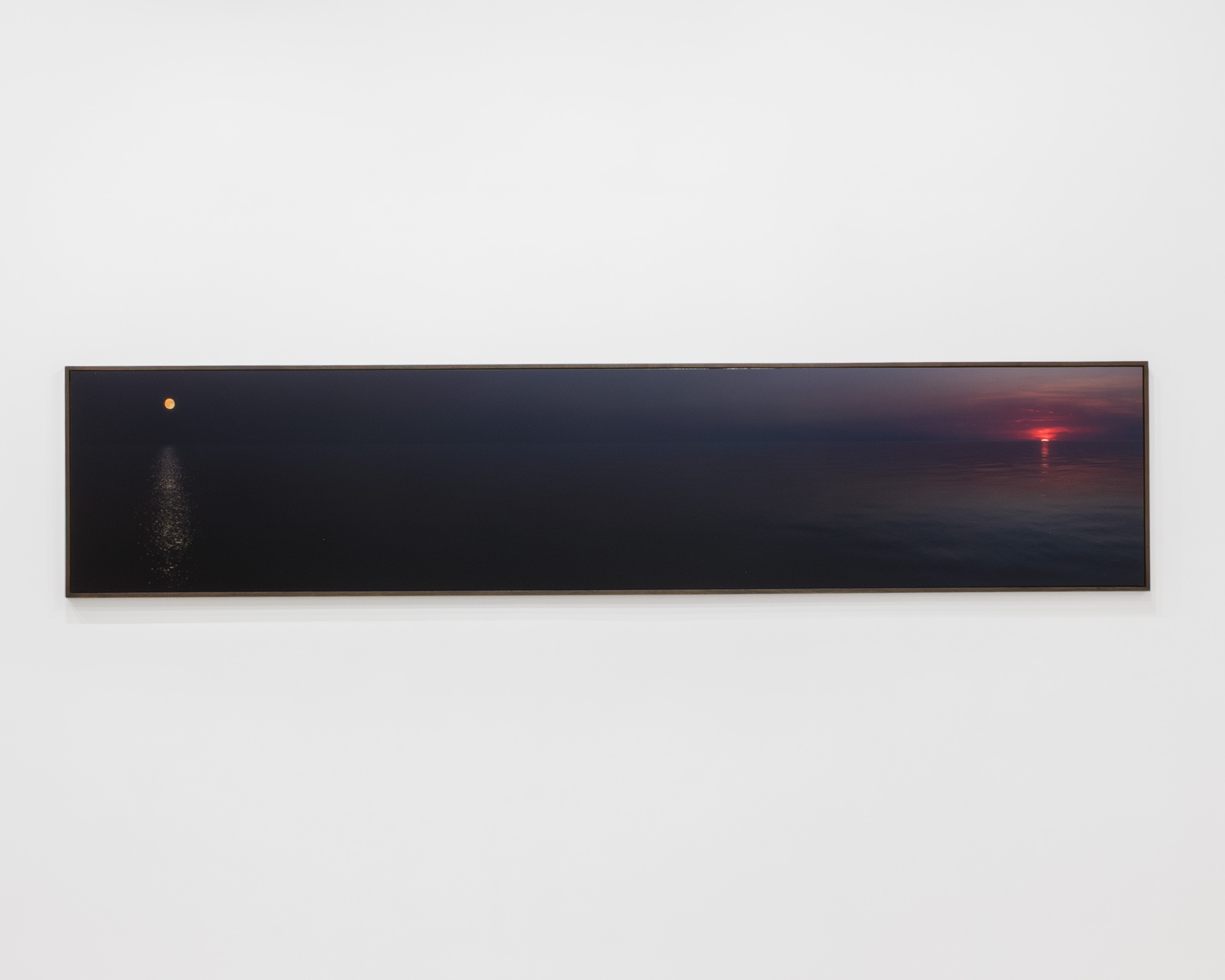
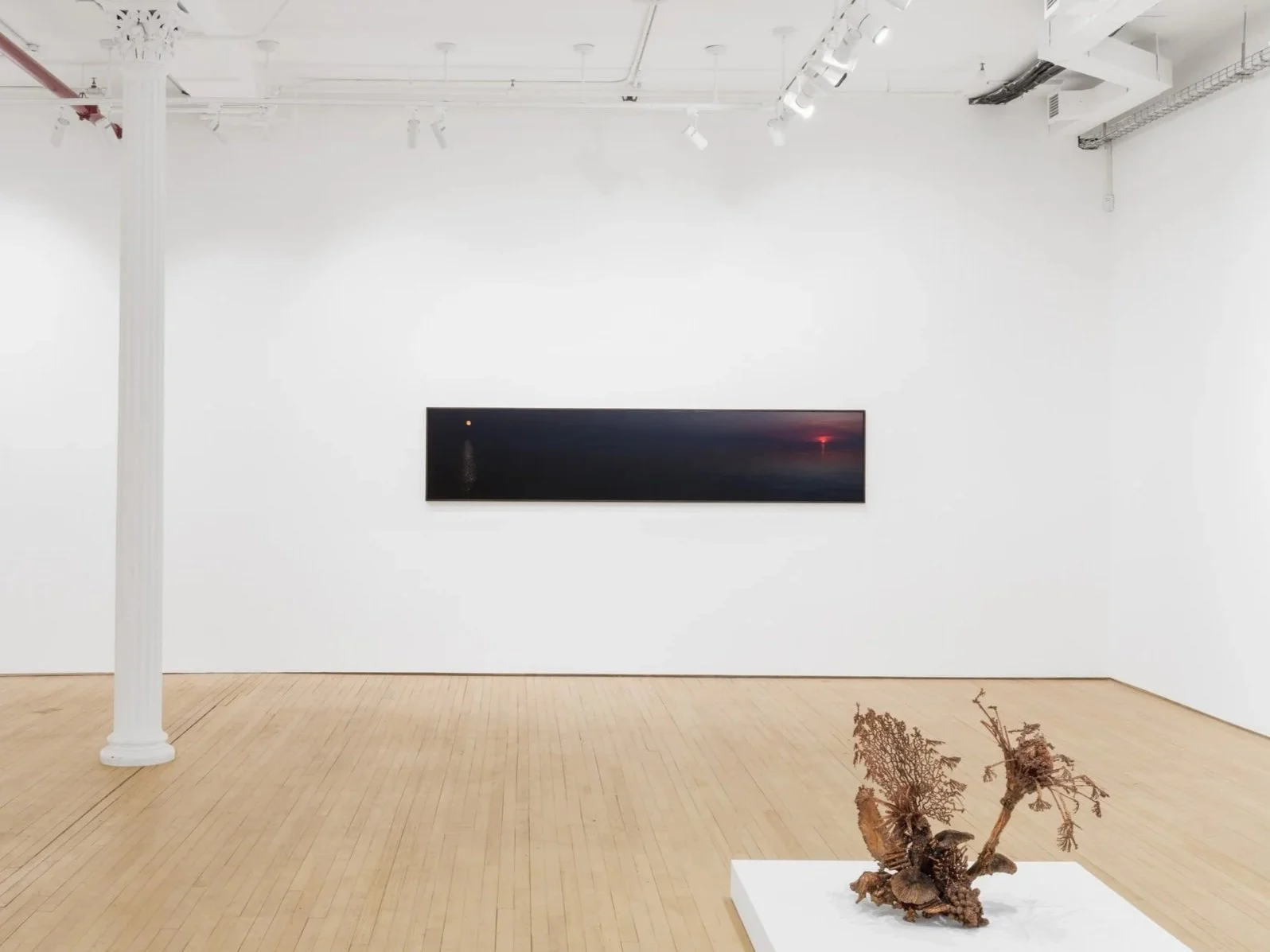
Scott McFarland, Point of terminator, 2025
Laminated archival inkjet print
24 x 120 in / 61 x 304.8 cm
INTERVIEW
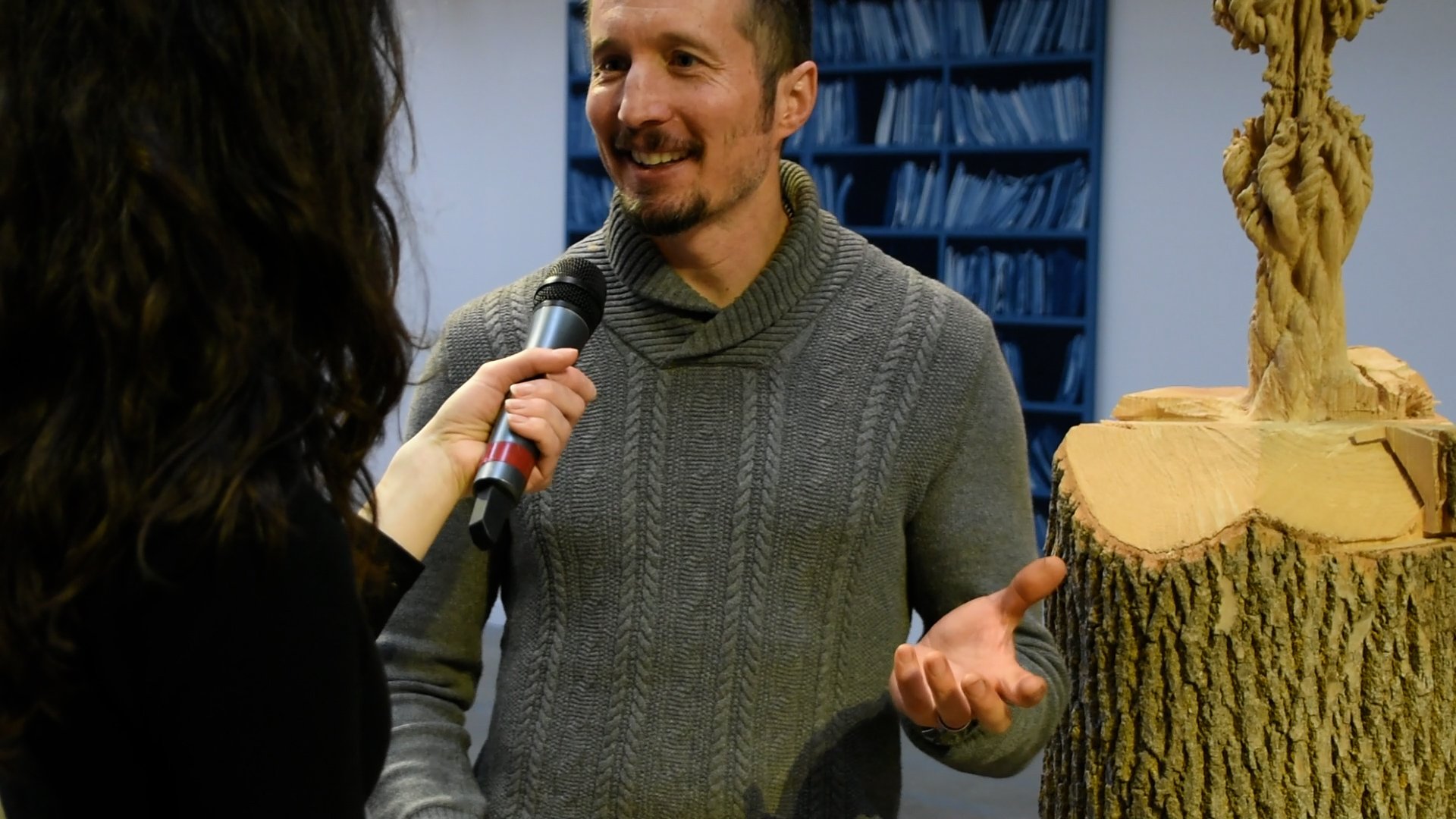
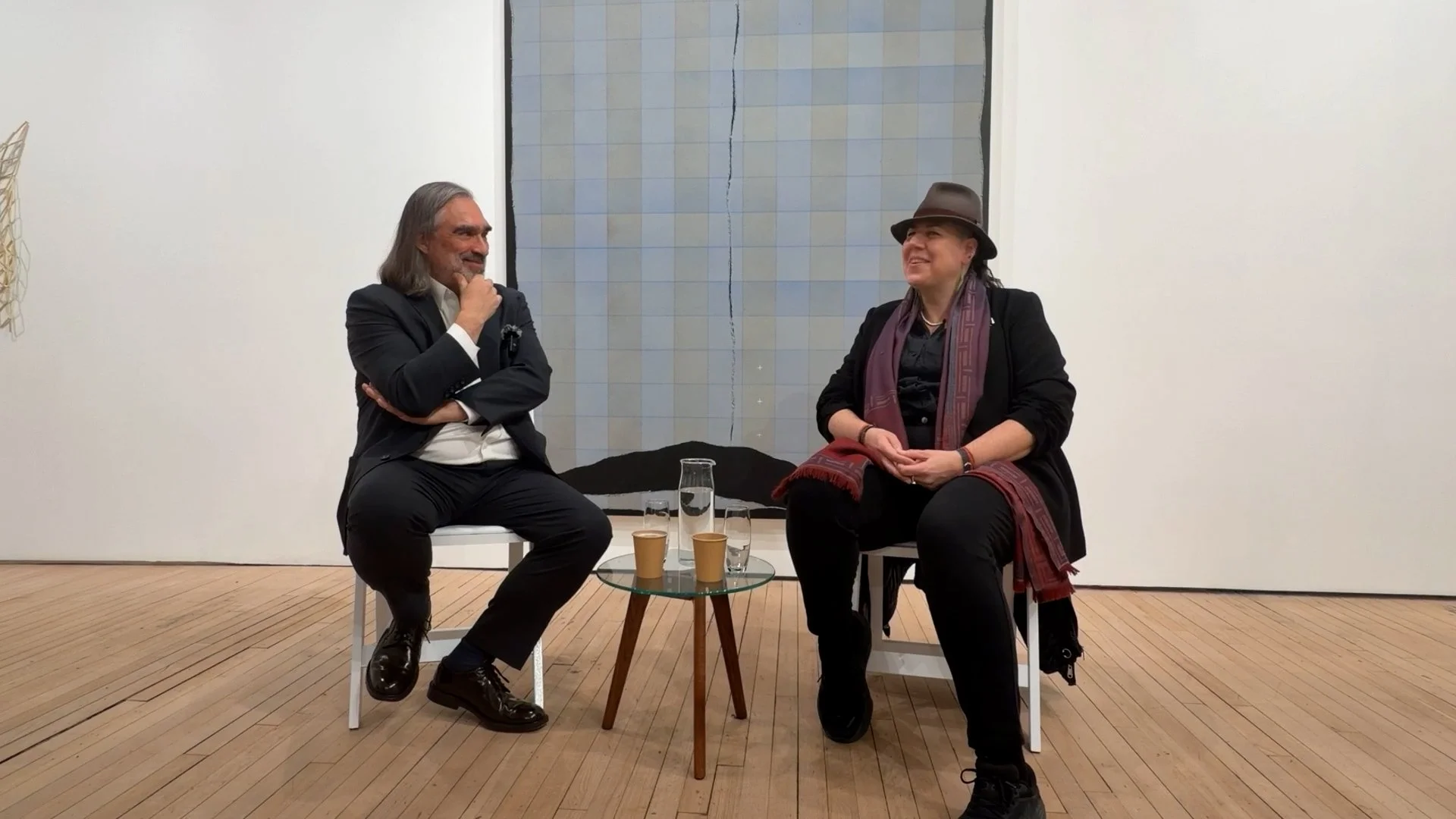
Scott McFarland interviewed by Marc Mayer, Part 1, New York
MM: The landscape subject is fundamental in Canadian art history going back to the 18th century. What brought you to it?
SM: My art-making experiences began in British Columbia when I was an undergraduate at UBC studying Fine Arts, more specifically photography. I remember some of my first exposures as a university student were taken on the beaches of the Sunshine Coast near Roberts’s Creek, and then were made into B&W Fibre Based prints. Originally, was studying Fine Arts to enter Architecture School. Taking photographs of scenes in nature proved to be more immediate and pleasurable that eventually I shifted away from my early childhood interest in becoming an architect. Though I was aware of Canadian landscape painting, it was not really in my mind then; rather early photography and some European 19th-century paintings were. In fact, being educated in Vancouver and then working there for a decade after graduating led to a kind of rejection of it conceptually. It was only after moving to Toronto in 2009 that I began to look at “Canadian” landscape subjects, in particular Georgian Bay. It was there that I started recognizing a dialogue with this cultural past.
MM: Coming to a subject via its mediated representation is a classic path, but the medium of photography and its technological expansion seem to be your real subject the more I learn about your method. What I admire about your work is that you don’t downgrade the subject for all that. It has even more presence, ironically, despite the foregrounded medium. You give the viewer a choice: to focus on the what or the how. Is striking an equilibrium between subject and object something you care about? Do you even see them as dichotomies?
SM: The way I learned about the medium of photography has still influenced my approach to it up till now. That is the subject should not be the most interesting thing about the picture. Photographers have often relied on the camera’s mechanical capture to free them of this responsibility or skill in the traditional sense of painting, and the resulting pictures seem to suffer for this from my perspective. Their focus on individual artistic styles also has too often leaned heavily on looking for subjects that are almost too interesting, or controversial ones at least, to grab the audience’s attention. My own approach is guided by trying to create interesting pictures of under-looked at subjects, trying to make them more interesting for an audience to look at. My pictures are created using a constructive process of multiple exposures taken over a period of time, and then digitally composited, which informs every aspect of shaping an image’s subject. I don’t really believe there are new subjects anymore, just new ways of seeing the same subjects already depicted and that can be the picture’s subject onto itself.
MM: There’s lots to say here, for example, Susan Sontag’s comment about how photographers attempt to confer significance on something, however banal, simply by deigning to photograph it. But you don’t use the camera like a magic wand like your more competitive colleagues. On the contrary, you have reintroduced labour into the process of mechanical picture making. Very much like a painter, you dwell much longer on the picture and put more work into it than we expect from photographs, as if contradicting its received ontology. That’s what I find most excited about your work. Aside from the aesthetic power of your pictures, you are integrating photography into the plastic arts, joining painting, drawing and sculpture. Did this happen by inadvertence or by design?
SM: The comparison to painting is real, but more specifically for me I think an architectural analogy has been more on my mind. Often, I describe my “photography” as the “constructed picture,” and that I am a “picture builder” or maker, but never a taker. Even though, when I was younger, I drew a lot, I never really was a good painter, and similar to Fox Talbot’s frustration with that medium, I looked to other mediums for expressing my ideas, “The Pencil of Nature.” Over time these ideas shifted from designing buildings and urban scapes to designing pictures of these subjects through the medium of photography. Architecture was actually one of my first photographic subjects, not landscapes.
Fortunately for me my early photography coincided with the development of a new technology, Photoshop, and explored it thoroughly. I should say as it relates to this discussion that I don’t do my own Photoshop work, but my tech and have been working together for more than 25 years, and they may feel the work is more akin to the process of painting. I am very much involved in every decision to each picture’s fabrication but “painting” has been more of a visual reference to me. Often my pictures are in dialogue visually with paintings of the past and some present, but this could also be said for photographs too, as I am constantly looking at both. I would agree. Though that this represents a marked shift in the medium’s ontology.
MM: The architecture model is helpful. It also points to a conceptual dimension that deepens the interest of pictures as art. The spectator doesn’t see the structure that produces the picture but is led to consider it through the strangeness of its perfection, and especially through knowing how you work. Imagining multiple exposures and multiple versions, each inscribing changes in time, light, detail, and weather, one can find oneself looking at a picture that doesn’t exist—not because it has been altered but because, despite appearances, it’s an impossible accumulation. Photoshop may be part of the method, but for me this conceptual conundrum is not a formal exploration of Photoshop, or of photography as such, but a troubling of the received idea of the photograph. It takes the spectator somewhere else cognitively. Time means something else for you than for a conventional photographer, doesn’t it?
SM: Yes, Photoshop is a kind of tool mostly similar to film, or the age-old question what kind of camera do you use”? I typically never talk about it, because it isn’t that interesting to me. Generally, it should not be noticeable, and that is why I still subscribe to a certain vision of realism, not fantasy. When I start working on a picture, I am already aware that I don’t need to get it in one shot. For me that wouldn’t even be possible, as I am not very good at that singular exposure kind of instant moment in time photographic model. Duration is what I am most interested in, how time can be represented and experienced in varying degrees of length depending on the subject. Ideally, the viewer sees a work of mine as expansive, like cinema, but all contained in a kind of gestalt, like a single image. Instead of watching something change over 2 hours, you are absorbing 2 hours, 2 days or 2 months of change in a single frame. Another element the architecture model introduces is entropy. Once a structure is designed and built, it begins to break down and fall apart over time. My best pictures can show time breaking down when one can’t tell what exposure is the first or the last, and when combinations of many are seamless yet apparent in the knowledge of one’s own experiences, something is not quite right. But that “knowledge” is false, because we have lived in a time of photography only, and our experiences and memories are trained to be static now because of the medium. There was a time people looked at pictures and didn’t conclude it was a single moment, as that was never experienced before photography was invented.
MM: That’s so interesting, Scott. Michael Baxandall’s concept of “period eye” is relevant here. We don’t know what it’s like to encounter a first photograph and how we would respond to it physically or conceptually as a novelty. Sure, there’s period literature about that moment, but we have always had photographs as far as everyone alive is concerned, so the initiation memory is too distant to be part of our contemporary experience of photographs. There are also a great many people who have no notion of what a photograph was like before digitization made it plastic, when it still held the evidentiary trust that is long gone. I was chatting with Claude (Al) the other day about the phenomenological difference between photographs and paintings. He said something that stayed with me, but that your work contradicts: “…paint is itself an event. The surface didn’t capture something that happened elsewhere—it was the happening, still present, still occurring in the same matter it occurred in. Photography is ontologically past tense no matter how immediate. Painting is ontologically present…” You short circuit that difference but without abandoning photography as form, just altering its relation to duration, which once felt categoric. How did you come to this? Through observation? Inadvertence? Or was it always part of your project?
SM: Ironically, photography through the act of photographing taught me how to see things non photographically, at least by photography’s traditional standards. When you open yourself up to the artistic possibility that a photograph can be constructed with more than one exposure, you never unsee or un-think that. Each new picture becomes a question of how far you can take that realization and be faithful to the subject too. The ontology that has existed since the medium’s earliest days has, in a way, restrained our sense of experiential being in the world. Almost as if we detached from our own evolution for a brief period of time—approximately 150 years, and only began to get back on track with the emergence of photography’s digitization. Strange to think of it that the Modern photographers project in their quest for the “decisive moment” upended our own sense of time via a mechanical construct to give us something so un-naturalistic but convinced us that it is true. As you say, it may take a few generations to shake that notion, but I want to know what it feels like now, and that is the crux of my project. You asked how I came to this, and I think it would be around the time I began making super wide format pictures akin to panoramas.
These first pictures of this kind were part of a body of work in the early 2000’s I shot in Vancouver called Gardens. In one location I was exploring, there was a vacant orchard on this large abandoned Point Grey estate that had a view over English Bay. From there I could see the city skyline in the distance on one side, and the Strait of Georgia opening to the west on the other, with North Shore Mountain in the middle. This required me to turn my head at least 180 degrees to take in this entire view. At first, I thought about capturing it as two or three standard 4 × 5 ratio shots and displaying them together, but there was something in the movement of the head that implied slower time, and I recognized this as a kind of phenomenological moment. See I didn’t have a panoramic camera to take the single super wide picture in one instant exposure, so I would have to turn the camera physically and stitch together the individual shots kind of similar to me scanning the scene while turning my head. I think, in this case, it was something like sixteen vertically oriented pieces of film for coverage of the orchard, with me rotating the camera on a tripod exposing each frame individually. This, in total, took about five minutes to do one pass, and within these five minutes there was a passage of time that is present in the final image, which is different than if I captured it at once in a single “decisive moment.” With that recognition I started to realize I was documenting my experiences in a space, not just the subjects, as l would return day after day and take more exposures to add to the final image. These composites depicting my experiences of spaces and time came to be what my pictures are about, and personally vindicated my own ruptures with tradition enough to invent a new term for it, the “Super Moment.”
MM: Are you saying that photography trained us to believe that some instants are more truth-bearing than others, and that the photographer’s task is to capture them, like panning for semantic gold? That feels right to me, and it absolutely begs undoing. If l understand you correctly, your project is about disenchanting us from the metaphysics of the single exposure-the idea that lived experience can be truthfully condensed into one privileged instant. If so, I think that’s an important task and maybe even urgent. SM: I guess when I started making pictures in the early 90's, there was a strong debate around the medium between what was developing within contemporary art, and the more traditional photographic community, which hadn’t changed very much since the 1960’s. The “traditionalists” were very dogmatic and not very welcoming to our new kinds of practices, often excluding or not recognizing them as valid. There was a moral sensibility often being employed centring around the idea that their photos represented the truth because of their analogue and indexical nature based on certain derived rules of the Modernist canon. This might make sense when you are providing photographic evidence in a court of law, but becomes a paradox when demanding it for a visual art context, a context that has never really borne any claim with the “truth” being desired as such; a fixed moment time. I’d say things have changed now, being 30 years later, and there is a plurality and diversity in the medium that make it far more interesting now even if photography has declined in art world stature since that period. An audience benefits from these changes, but for me once a picture is complete, I move on with the next lived experience, trying to get closer to accurately representing it each time, but not quite ever getting there.
SM: I guess when I started making pictures in the early 90's, there was a strong debate around the medium between what was developing within contemporary art, and the more traditional photographic community, which hadn’t changed very much since the 1960’s. The “traditionalists” were very dogmatic and not very welcoming to our new kinds of practices, often excluding or not recognizing them as valid. There was a moral sensibility often being employed centring around the idea that their photos represented the truth because of their analogue and indexical nature based on certain derived rules of the Modernist canon. This might make sense when you are providing photographic evidence in a court of law, but becomes a paradox when demanding it for a visual art context, a context that has never really borne any claim with the “truth” being desired as such; a fixed moment time. I’d say things have changed now, being 30 years later, and there is a plurality and diversity in the medium that make it far more interesting now even if photography has declined in art world stature since that period. An audience benefits from these changes, but for me once a picture is complete, I move on with the next lived experience, trying to get closer to accurately representing it each time, but not quite ever getting there.
See more from the in conversation series